
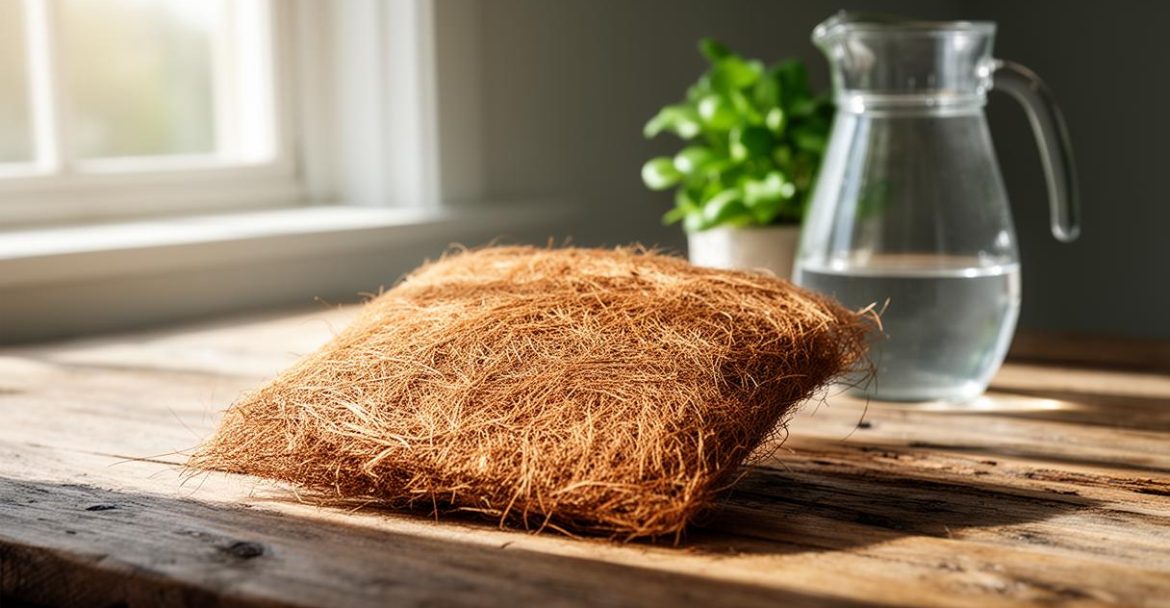
When it comes to treating household wastewater, homeowners are increasingly turning away from noisy, power-hungry machinery and looking instead towards nature for answers. One such answer has been quietly gaining ground across the UK and Ireland: the coconut filter. This unassuming solution, built from a material once considered agricultural waste, is proving itself to be a genuinely sustainable alternative to conventional treatment plants, offering households a way to manage sewage responsibly without the hefty running costs or environmental baggage that typically come with mechanical systems.
Key takeaways
- Coconut filters use renewable coconut husk fragments as a natural, sustainable alternative to mechanical wastewater treatment systems.
- The filtration process relies on physical, biological, and chemical actions without the need for electricity or complex moving parts.
- These systems provide high-performance treatment, including a 99.9% reduction in pathogens and significant decreases in nitrogen and ammonia levels.
- Homeowners benefit from lower long-term costs because the non-mechanical design eliminates the need for pumps, aerators, and electricity.
- The coconut husk medium is fully compostable at the end of its fifteen-year lifespan, ensuring a minimal environmental footprint.
- The compact design allows for easy integration with existing septic tanks, making it a practical upgrade for properties with limited space.
Understanding coconut filters: a natural approach to domestic wastewater treatment
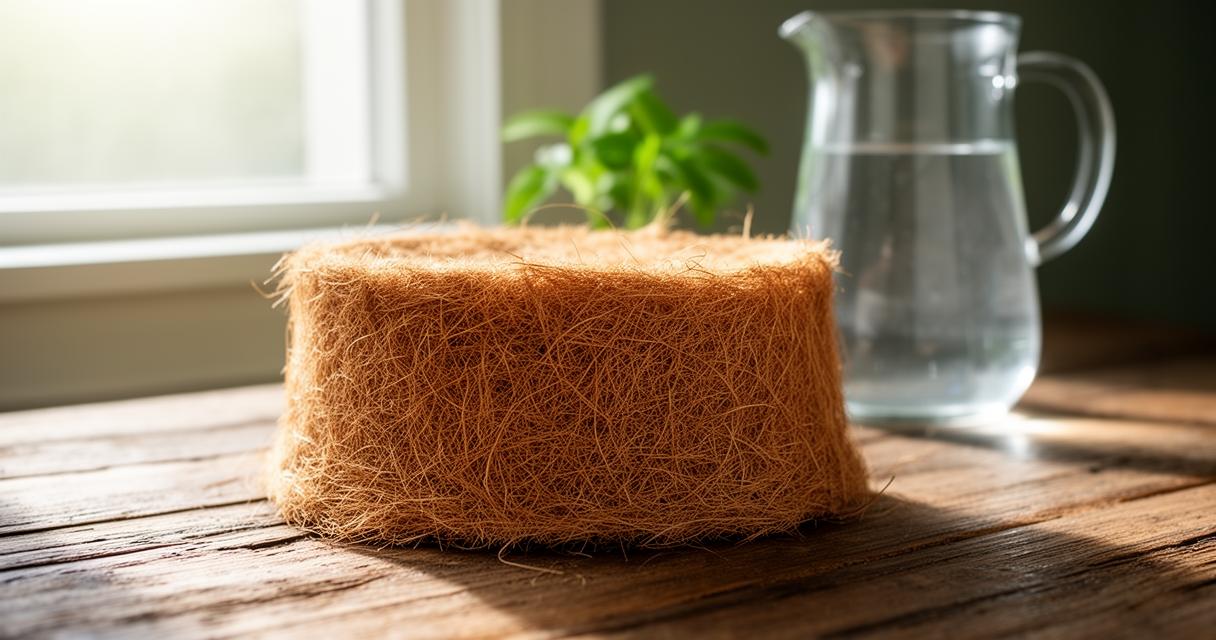
At the heart of this innovation sits the Ecoflo Coco Filter, developed by Premier Tech Water and Environment, a company with more than twenty-five years of experience in sustainable wastewater treatment. The concept is refreshingly simple yet remarkably effective: fragments of coconut husk, sourced from Sri Lanka, are packed into a biofilter where they act as a natural filtration medium. Unlike synthetic alternatives, these husk fragments are entirely organic and renewable, making them a fitting symbol of the shift towards greener sanitation.
The science behind coconut fibre filtration technology
The filtration process itself unfolds in several stages once wastewater leaves the septic tank. First comes an initial separation, where solids settle out before the liquid moves into the biofilter. From there, the coconut husk performs a combination of physical, biological, and chemical filtration, trapping particles while beneficial microorganisms break down organic matter. A clever non-mechanical tipping bucket system distributes the wastewater evenly across the filter bed, meaning the entire process runs without electricity or moving parts that might fail over time. This absence of mechanical components is precisely what gives the system its reputation for reliability and low fuss.
How coconut filters compare to traditional wastewater treatment methods
Traditional sewage treatment plants often rely on pumps, aerators, and electrical controls that demand constant power and regular servicing. The coconut filter sidesteps all of that. Where older systems might have used peat moss as a filtering material, coconut husk has emerged as a more sustainable and widely available substitute, offering comparable, if not superior, performance. Independent testing has shown reductions of around seventy percent in biochemical oxygen demand and suspended solids, alongside an eighty-five percent drop in nitrogen and ammonia levels. Perhaps most striking is the near-total elimination of pathogens, with reductions reaching 99.9 percent, a figure that places the system firmly in line with strict compliance standards expected across the UK and Ireland.
Environmental and Economic Advantages of Coconut Filter Systems
Beyond the technical performance, what makes this system so compelling is the balance it strikes between affordability and environmental responsibility. Households considering an upgrade to their sanitation setup often find themselves weighing cost against conscience, and the coconut filter manages to satisfy both.
Cost-effective solutions: affordable pricing for household applications
Because the system requires no electricity and has minimal moving parts, ongoing running costs are dramatically reduced compared with conventional treatment plants. There is no pump to replace, no aerator to service, and no electricity bill to factor into the household budget. With a lifespan stretching up to fifteen years, the coconut filter represents a long-term investment that pays for itself through reduced maintenance and energy savings. For families exploring options such as septic tank grants, this combination of low upfront cost and minimal upkeep makes the technology particularly attractive.
Zero environmental impact: the eco-friendly benefits of natural filtration media
The environmental credentials of this system extend well beyond its energy-free operation. The coconut husk itself is fully compostable once its working life is over, meaning there is no lingering waste product to dispose of responsibly. Sourcing the material from Sri Lanka via maritime shipping has also been shown to reduce carbon emissions significantly, with studies indicating a twelve percent reduction compared to rail transport and a striking five hundred and forty percent reduction compared to road transport over a fifty-year period. This makes the supply chain itself part of the sustainability story, not just an afterthought. With over one hundred thousand installations completed globally, the Ecoflo Coco Filter has demonstrated that natural resources can be harnessed at scale without compromising on environmental integrity.
Practical implementation in domestic settings
For homeowners wondering how such a system might actually fit into their property, the practicalities are reassuringly straightforward. The design has been engineered specifically with domestic use in mind, making it accessible even for smaller plots or properties with limited space.
Compact Design and Integration with Septic Systems
The biofilter units themselves are constructed from durable materials including polyethylene, concrete, and fibreglass, ensuring longevity even in challenging ground conditions. Their compact footprint allows them to be installed alongside existing septic tanks, effectively upgrading a household's treatment capacity without requiring a complete overhaul of the drainage system. This makes the coconut filter particularly well suited to replacing ageing septic tanks or supplementing sewage treatment plants that struggle to meet modern effluent standards.
Installation and Maintenance Requirements for Individual Treatment Stations
Installation typically involves connecting the biofilter to the outflow of a septic tank, after which the system operates largely unattended. Because there are no mechanical components to monitor, maintenance visits are infrequent, though Premier Tech, based in Peterlee in the North East of England, offers service and maintenance packages to ensure systems continue performing at their best throughout their working life. Households can expect:
- Minimal servicing requirements thanks to the non-mechanical design
- Compliance with modern effluent discharge standards
- A compostable end-of-life material with no hazardous waste
As demand grows for domestic systems, commercial systems, and even agricultural solutions that reduce environmental footprint, the coconut filter stands out as a genuinely sustainable choice. It offers households across the UK and Ireland a way to meet their sanitation needs responsibly, proving that sometimes the most effective innovations are also the simplest.