

Few people give much thought to the gritty substance scattered across British roads each winter, yet road grit has a surprisingly rich history. From humble beginnings with horse-drawn carts to sophisticated fleets of modern gritter lorries, the story of how the UK came to depend on salt for winter road safety is one worth telling.
Key takeaways
- The use of road gritting in the UK began in 1903 in Westminster, initially relying on sand and cinders for traction before shifting to rock salt.
- The post-WWII period and the rapid increase in vehicle numbers necessitated the development of more formal and effective national de-icing strategies.
- The Highways Act 1980 established a legal duty for UK highway authorities to clear roads of snow and ice, institutionalizing winter road management.
- Modern road salt works through ‘freezing point depression,’ where salt dissolves into moisture to prevent ice formation at lower temperatures.
- Current UK winter maintenance operations utilize data-driven fleets that deploy over two million tonnes of rock salt annually across priority road networks.
- Despite sophisticated technology, only about 40% of British roads are currently treated, prompting ongoing discussions regarding funding and coverage.
- Innovative and sustainable approaches, such as using additives like beet juice, are being explored to maintain effectiveness while reducing environmental impact.
From Ancient Preservation to Modern Roads: The Journey of Salt in Winter Safety
Early discoveries: when communities first recognised salt’s ice-fighting properties
Long before tarmac roads and motor vehicles became commonplace, communities understood that salt had remarkable properties beyond preserving food. The leap to applying this knowledge to winter weather preparation was a gradual one. In Britain, the earliest recorded use of road gritting dates to 1903, when horse-drawn carts were deployed across Westminster to combat icy surfaces. The process was painstakingly slow, taking at least twelve days to cover the entire Westminster network. At that time, only a handful of motor vehicles existed on British roads — by the close of 1904, that number had grown to roughly 23,000 registered vehicles nationwide, making the need for safer road surfaces increasingly urgent.
Early formulations of road grit were quite different from what we recognise today. Sand and cinders were the materials of choice, offering basic traction without any meaningful ice melting capability. It was only as understanding of sodium chloride deepened that rock salt began to emerge as the superior solution, capable not merely of improving grip but of actively lowering the freezing point of water on road surfaces.

Post-war britain: how the severe winters shaped national gritting strategies
The 1940s marked a turning point in how Britain approached winter maintenance. As the country rebuilt after the Second World War, the rising number of vehicles on the roads — reaching approximately 3.3 million by 1955 — brought with it a far greater need for reliable de-icing strategies. Severe winters made the consequences of inadequate gritting all too apparent, and rock salt usage expanded significantly during this period.
Legislative frameworks eventually caught up with operational practice. The Highways Act 1980 placed formal legal duties on highway authorities to keep roads clear of snow and ice, cementing winter road management as a matter of public responsibility rather than mere convenience. Scotland and Northern Ireland followed with their own legislation, reinforcing a nationwide commitment to ice prevention.
Why uk roads depend on gritting salt today: the science behind winter preparedness

How freezing point depression keeps traffic moving during cold snaps
The chemistry underpinning modern de-icing is elegantly straightforward. When grit salt is spread across a road surface, it dissolves into moisture already present, creating a saline solution with a lower freezing point than pure water. This process, known as freezing point depression, prevents ice from forming even as temperatures drop. Gritters typically operate when road surface temperatures fall to zero degrees or below and moisture is present — a detail that matters because road surface temperatures can be significantly colder than the surrounding air, particularly in shaded or sheltered areas.
It is worth noting that white salt and liquid brine offer alternatives to traditional rock salt, each suited to particular conditions. White salt, being cleaner and more finely screened, is especially useful in areas with significant foot traffic where staining is a concern. The effectiveness of any salt-based product does diminish below minus five degrees, at which point additional measures or specialist formulations may be required for de-icing products to remain effective.
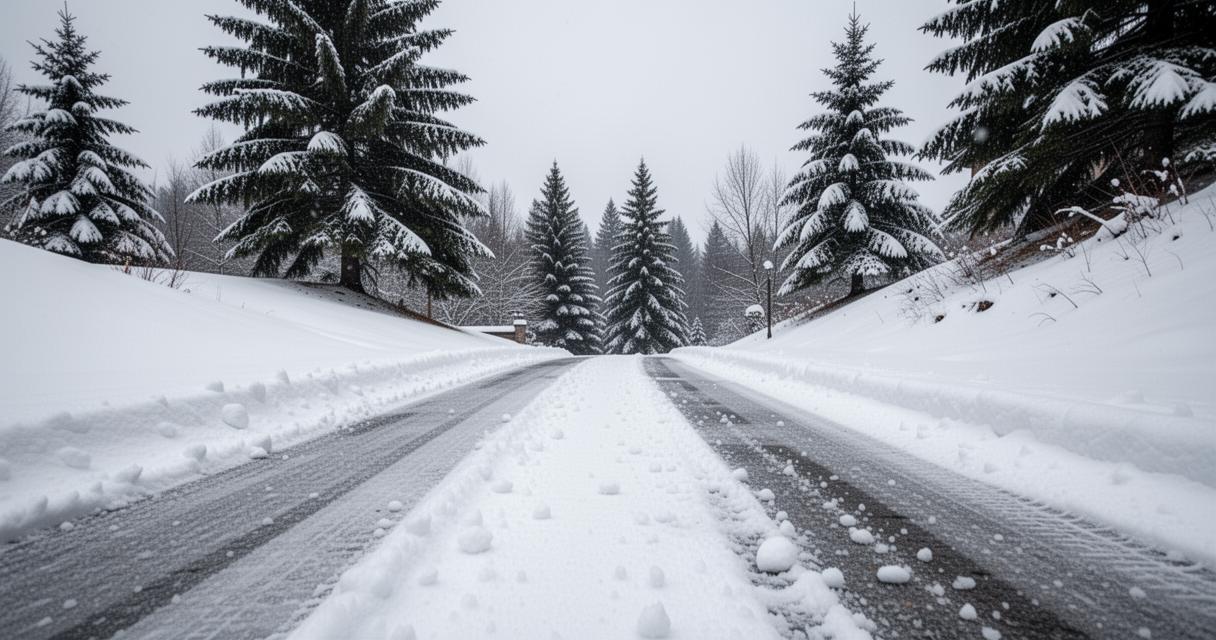
The Evolution of Gritting Fleets: From Manual Spreading to Modern Winter Maintenance
The contrast between the horse-drawn carts of 1903 and today’s technologically advanced gritter lorries could scarcely be greater. Modern winter gritting operations rely on real-time weather data, carefully calibrated spreading rates, and pre-planned priority route networks to deliver road traction where it is needed most. Manual spreading remains relevant for targeted applications in confined or pedestrianised spaces, but the backbone of national winter maintenance is now a fleet of sophisticated vehicles capable of covering vast distances efficiently.
The scale of the UK’s current commitment to winter road safety is considerable. The country uses over two million tonnes of rock salt annually, at a cost exceeding £150 million, to keep its roads passable during cold months. Yet only around 40% of Britain’s roads are currently treated, highlighting ongoing debates about funding and coverage. Innovative approaches, including the use of additives such as beet juice to improve adhesion and reduce the quantity of salt required, reflect a growing emphasis on sustainable de-icing — balancing effectiveness against environmental concerns such as soil and waterway contamination. The road from cinders and sand to smart, data-driven winter maintenance has been a long one, but the destination is a measurably safer Britain each winter.