
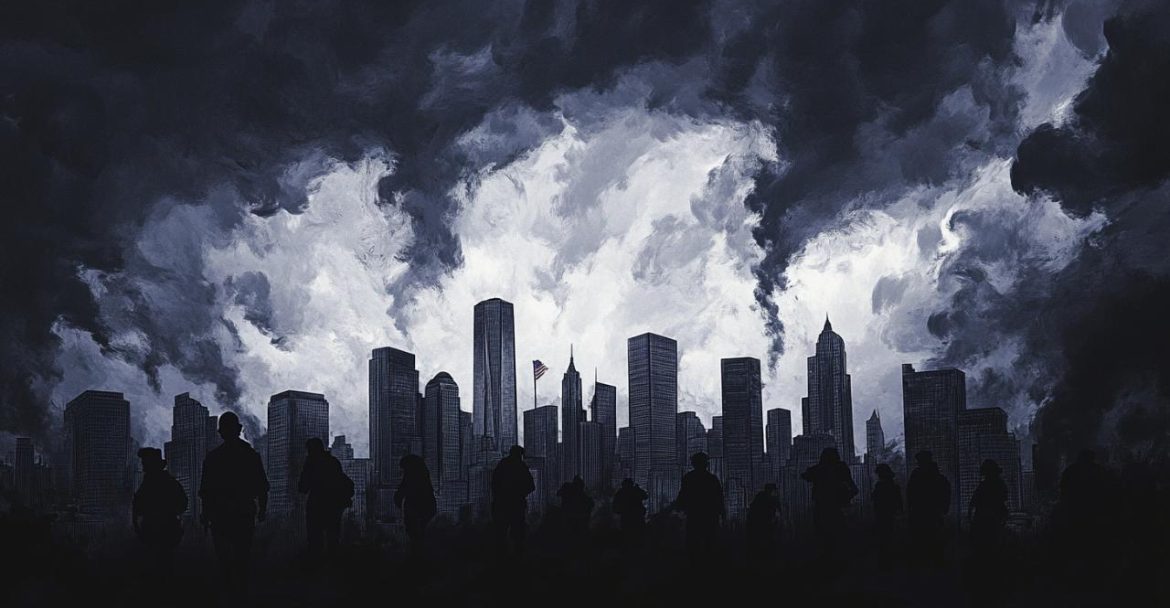
The United States continues to grapple with an enduring crisis of violence that manifests across communities, streets, and law enforcement encounters. Despite decades of attempts to curb this tide, the nation finds itself caught in cycles of reactive policing, underfunded community programmes, and entrenched legislative barriers that resist meaningful transformation. The question of why America struggles to break free from this pattern is not easily answered, but a closer look at the historical, cultural, and institutional forces at play reveals the complexity of the challenge.
The Deep-Rooted Historical Context of American Policing and Armed Response
To understand the present state of law enforcement and its relationship with violence, one must look back at the foundations upon which modern policing was built. American police forces have been shaped by a legacy of militarisation and a culture of armed response that traces its origins to moments of national upheaval. The aftermath of the Second World War saw the return of veterans trained in combat, many of whom entered civilian policing roles. This infusion of military experience and thinking brought with it a mindset oriented towards confrontation and control, rather than mediation and community engagement.
Legacy of the Second World War and Militarisation of Domestic Forces
The post-war era did not merely introduce military personnel into policing; it also ushered in an ideology that framed domestic security through a lens of conflict. Over subsequent decades, this approach became more pronounced, particularly as urban unrest and the so-called war on crime intensified. Since the 1970s, the presence of SWAT teams has surged by 1,500 per cent, reflecting a shift towards paramilitary tactics within civilian law enforcement. This trend accelerated with the transfer of surplus military equipment to local police departments, blurring the lines between soldiers and officers. The result is a police culture that too often prioritises force and tactical dominance over dialogue and de-escalation.
From Martin Luther King Jr. to Modern Protest Movements: A Pattern of Escalation
The historical arc of protest and state response in America reveals a pattern of escalation rather than reconciliation. During the civil rights movement, figures such as Martin Luther King Jr. championed non-violent resistance, yet were met with violent suppression. This dynamic has repeated itself across generations, from the anti-war demonstrations of the Vietnam era to the recent uprisings sparked by police killings of Black Americans. Each wave of protest has been met with a militarised response, reinforcing a cycle in which public outcry is answered with force rather than reform. The echoes of past violence reverberate in the present, as communities continue to demand accountability and change, only to encounter the same institutional resistance.
Cultural and legislative barriers: why reform remains elusive across states
Efforts to reform law enforcement and reduce violence have been stymied by a complex web of cultural attitudes and legislative inertia. Across the United States, a patchwork of laws and policies reflects deep divisions over the role of policing, the rights of gun owners, and the balance between public safety and individual liberty. These divisions are not merely political abstractions; they are embedded in the fabric of American life and shape the way violence is both understood and addressed.
The Trump Era's Influence on Federal and Local Law Enforcement Attitudes
The presidency of Donald Trump marked a period of heightened polarisation around issues of law enforcement and violence. His administration championed a vision of law and order that emphasised aggressive policing and minimised calls for reform. Rhetoric that celebrated toughness and dismissed the concerns of activists emboldened many within law enforcement to resist change. Federal support for initiatives that might have encouraged de-escalation or accountability was limited, and in some cases, rolled back. This top-down signalling had a ripple effect across local agencies, reinforcing a status quo that prioritises authority over accountability. Even as grassroots movements and reform advocates pushed for new approaches, the political climate during this period created significant obstacles to progress.
Access to Weapons and the Second Amendment: A Constitutional Catch-22
No discussion of violence in America can ignore the role of firearms. The United States possesses the highest rate of gun ownership in the world, with approximately 120.5 firearms per 100 residents. This saturation of weapons is both a symptom and a driver of the violence that pervades American society. The Second Amendment, enshrined in the Constitution, has been interpreted by many as an absolute right to bear arms, creating a formidable legal and cultural barrier to regulation. Any attempt to restrict access to weapons, even in the interest of public safety, is met with fierce resistance from advocacy groups and a significant portion of the electorate. This constitutional catch-22 means that police officers operate in an environment where the presumption of armed suspects is ever-present, contributing to a hair-trigger mentality that too often ends in tragedy. The proliferation of guns also fuels cycles of violence within communities, where disputes escalate rapidly and lethally.
Mental Health, Urban Poverty, and the Social Networks Amplifying the Crisis
Beyond the institutions of policing and the availability of weapons, the crisis of violence in America is deeply intertwined with broader social failings. Mental health services remain woefully underfunded, and urban poverty creates conditions in which violence can flourish. At the same time, the rise of social networks has transformed the way information about violence is disseminated and perceived, amplifying both the urgency of the crisis and the challenges of addressing it.
Underfunded Mental Health Services and Their Role in Violent Encounters
Across the nation, mental health services are stretched thin, leaving individuals in crisis without the support they need. This deficit has profound consequences for law enforcement encounters, as officers are often the first responders to mental health emergencies. Without adequate training in conflict resolution or access to mental health professionals, these interactions can escalate into violence. Advocates such as Aswad Thomas, who was himself a victim of gun violence, argue that his attacker needed mental health services rather than incarceration. The lack of investment in these services means that the justice system is asked to manage crises it is ill-equipped to handle. Moreover, the broader social determinants of crime, including housing instability, unemployment, and inadequate healthcare, create environments in which both crime and violent policing responses are more likely. In Washington DC, for instance, only three full-service grocery shops serve the nearly 160,000 residents of Wards 7 and 8, illustrating the extent of disinvestment in some communities. During the height of the pandemic, unemployment in these wards soared to levels exceeding 20 per cent, further straining already vulnerable populations.
Social Networks as Catalysts: How Digital Platforms Shape Public Perception and Police Response
The advent of social networks has fundamentally altered the landscape of violence and accountability. Incidents that might once have remained local or unreported now reach global audiences within minutes, sparking outrage and demands for justice. Platforms such as Twitter and Facebook have become spaces where activists organise, victims share their stories, and the public bears witness to police brutality. This heightened visibility has been instrumental in galvanising movements such as the defund police movement, which calls for redirecting resources from law enforcement to community-led prevention efforts. However, the same platforms can also amplify misinformation, deepen polarisation, and create pressure for rapid, often reactive, policy responses. The interplay between social networks and violence is complex: while they can hold power to account, they also contribute to a fragmented and contentious public discourse that makes consensus on reform even more elusive.
The challenge of ending violence in the United States is not rooted in a single cause, but in a constellation of historical, cultural, and institutional factors that resist simple solutions. From the militarisation of policing to the saturation of firearms, from the underfunding of mental health services to the amplifying effects of social networks, the obstacles are formidable. Crime survivors and advocates continue to push for a shift towards investment in prevention, victim services, and community-led initiatives. Yet, as long as legislative barriers remain, and as long as cultural attitudes prioritise punishment over rehabilitation, the cycle of violence is likely to persist. Breaking free will require not only policy change but a fundamental rethinking of how America understands safety, justice, and the role of law enforcement in a democratic society.