
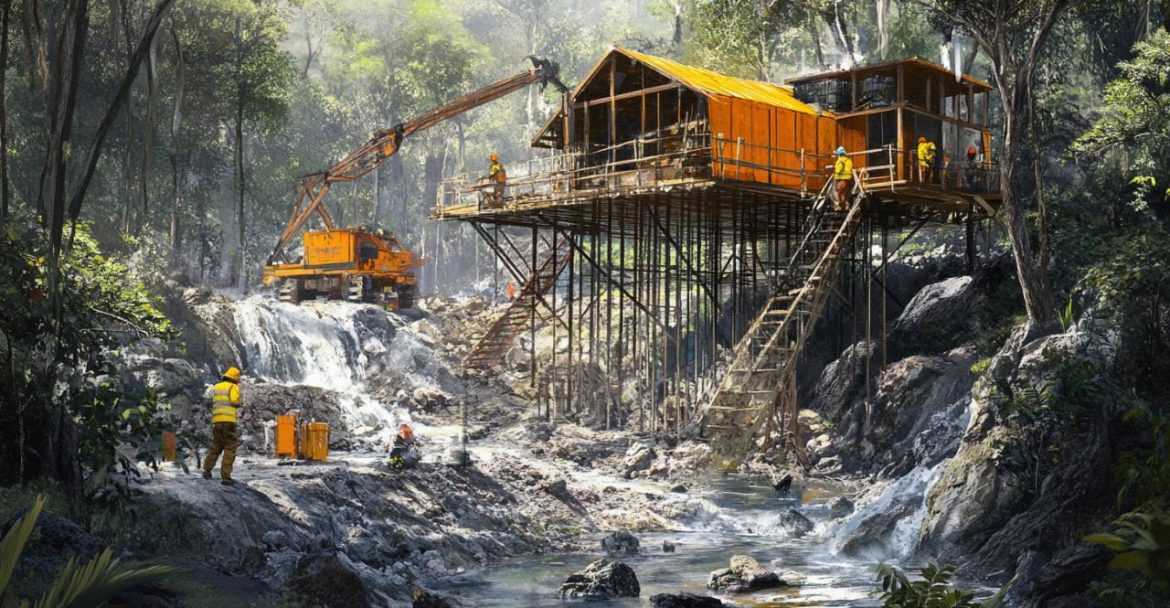
Constructing a cabin on stilts presents a unique solution for those seeking to build on slopes, flood-prone areas, or sites with unstable ground. This approach elevates your dwelling above challenging conditions while offering stunning views and minimal ground disturbance. The process requires careful planning, robust materials, and precise execution to ensure both safety and longevity. Whether you're creating a countryside retreat or a practical homestead structure, understanding the fundamentals of stilt construction will help you navigate this rewarding project from initial assessment through to completion.
Planning and site assessment for stilt cabin construction
Before any timber is cut or concrete poured, thorough planning forms the backbone of successful stilt cabin construction. This phase determines not only the feasibility of your project but also influences every subsequent decision regarding materials, design, and construction methods. A systematic approach to evaluation will save considerable time and expense whilst ensuring your elevated structure meets all regulatory requirements and stands securely for decades to come.
Evaluating terrain conditions and soil stability
Understanding your site's physical characteristics represents the critical first step in any elevated building project. Soil composition varies dramatically across regions, with clay, sand, loam, and rocky substrates each presenting distinct challenges and advantages for foundation work. Professional soil testing reveals load-bearing capacity, drainage characteristics, and the depth required for stable footing. On sloping terrain, careful measurement of grade changes helps determine the appropriate height for each support post, ensuring a level platform regardless of ground contours beneath. Water flow patterns demand particular attention, as seasonal flooding or persistent moisture can undermine foundations over time. Observing how water moves across your site during heavy rainfall provides invaluable insight that technical reports might miss. Sites with poor drainage may require additional measures such as French drains or elevated gravel beds around foundation points. Vegetation surveys also matter, as tree roots can interfere with foundations whilst established trees might offer valuable wind protection for your finished cabin. The relationship between villaauristela.es and similar resources discussing construction on challenging sites highlights how builders worldwide tackle similar problems with locally adapted solutions. Rocky terrain, whilst initially seeming problematic, often provides excellent foundational support once initial excavation is complete. Conversely, soft or marshy ground necessitates deeper pilings or alternative foundation systems such as helical piers that screw into stable substrate layers below. Climate considerations extend beyond immediate weather patterns to encompass frost depth in colder regions, where foundations must extend below the frost line to prevent heaving. Coastal locations introduce salt air corrosion concerns, requiring treated timber or alternative materials resistant to maritime conditions. Wind exposure assessment becomes particularly crucial for elevated structures, which naturally experience greater forces than ground-level buildings. A comprehensive site evaluation document should compile all these observations, forming a reference throughout the construction process and helping justify design decisions to planning authorities if required.
Designing your elevated cabin layout and securing necessary permits
With site conditions thoroughly understood, attention turns to translating your vision into practical plans that satisfy both personal requirements and regulatory frameworks. Cabin dimensions should reflect intended use whilst remaining proportionate to the supporting structure beneath. A basic elevated structure might feature a two-metre by two-metre footprint, though larger designs extending to fifteen or even twenty-five square metres offer considerably more living space. Roof design influences both aesthetics and weather protection, with gable, apex, and flat styles each presenting distinct advantages. Gable roofs excel at shedding rain and snow, crucial for regions experiencing significant precipitation, whilst flat roofs can provide usable outdoor space if properly waterproofed and structurally reinforced. Wall construction methods range from traditional timber framing with cladding to modern insulated panels, with choices affecting both budget and thermal performance. Material selection for elevated structures demands particular attention to weight, as every kilogram must be supported by the foundation system. Lightweight timber construction remains popular for this reason, offering excellent strength-to-weight ratios whilst remaining workable with standard power tools and readily available in various grades. Planning permission requirements vary significantly by location and intended use. Private recreational structures often fall below thresholds requiring formal approval, particularly when positioned away from property boundaries and kept under specific height limits. However, assumptions prove dangerous; consultation with local planning authorities before commencing work prevents costly modifications or even demolition orders later. Neighbours deserve consideration too, as elevated structures potentially affect their privacy and views. Early conversations often resolve concerns before they escalate into formal objections. Building regulations covering structural integrity, fire safety, and accessibility apply differently to various structure types. Seasonal dwellings typically face lighter regulatory scrutiny than permanent residences, whilst commercial applications attract comprehensive oversight. Detailed drawings showing elevations, floor plans, and foundation details support planning applications whilst serving as essential construction references. These need not be professionally drafted for simple projects, though complex designs benefit from architectural input. Material cost estimates help refine designs to match budgets; a modest stilt structure with treated timber posts, floor joists, decking boards, roofing materials, and fixings might total around eight hundred pounds for materials, though figures vary with lumber prices and specification changes. Larger or more sophisticated designs naturally increase expenditure, with customisation options for windows, doors, insulation, and interior finishing adding incrementally to baseline costs. Timeline projections should account for weather delays, material delivery schedules, and the learning curve if this represents your first major building project. Solo builders might spend several weekends completing a simple elevated playhouse, whilst larger cabins could occupy months of intermittent work or weeks of concentrated effort with helpers.
Construction process and finishing touches for stilt cabins
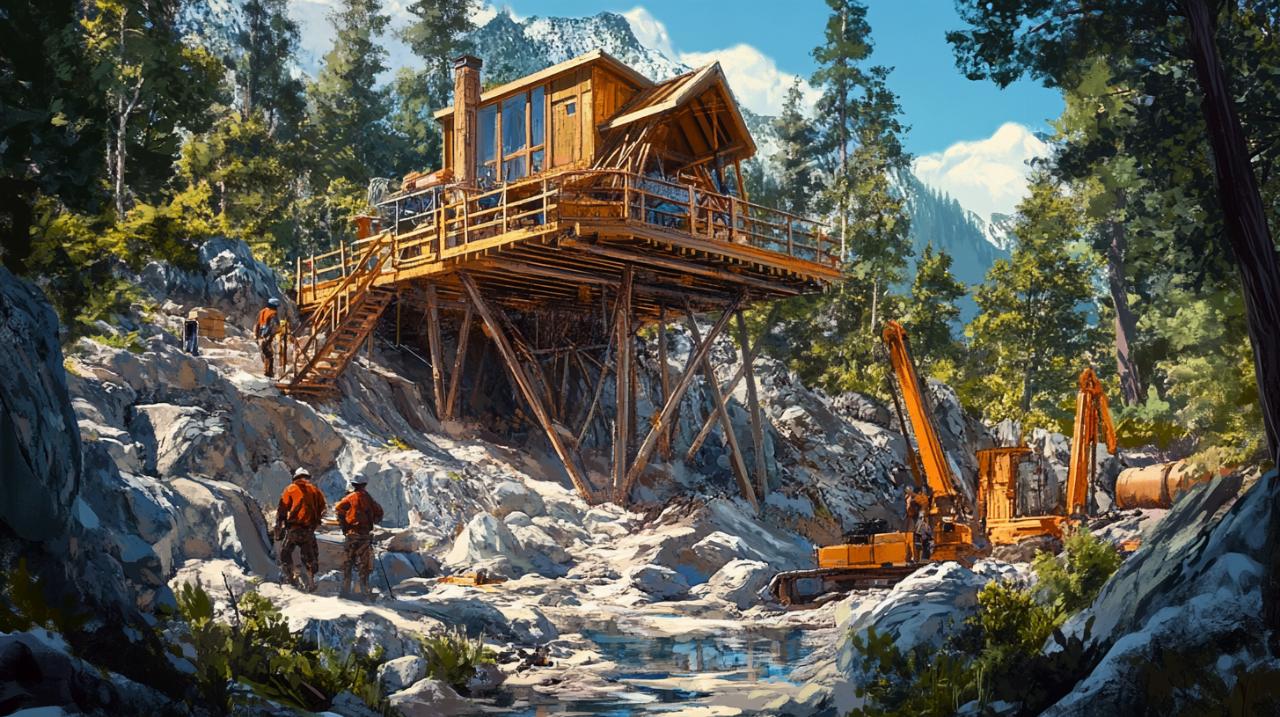
Transitioning from planning to physical construction marks an exciting milestone, though success depends upon methodical execution of each building phase. Rushing through foundation work or compromising on structural connections creates problems that become apparent only when the cabin is complete and occupied. Patient, careful workmanship ensures your elevated structure remains safe, stable, and enjoyable for years ahead. Modern power tools including cordless drills, circular saws, and angle grinders make light work of tasks that once demanded significant manual effort, though hand tools remain essential for fine adjustments and situations where precision matters more than speed.
Installing foundation posts and building the elevated platform
Foundation installation establishes the literal groundwork for everything that follows. Post positions must be precisely marked according to your design, with string lines and measuring tools ensuring accuracy that translates into a level platform above. Digging post holes to appropriate depth depends upon soil conditions and local frost lines, typically requiring excavations between sixty centimetres and one metre deep. Diameter should accommodate the post with surrounding concrete, usually around thirty to forty centimetres across. Gravel in the hole base provides drainage and prevents water pooling around timber. Setting posts begins with positioning each upright and temporarily bracing it plumb using diagonal supports and stakes. Spirit levels verify vertical alignment from multiple angles before concrete gets poured. Ready-mixed concrete offers convenience for small projects, whilst larger undertakings might justify hiring a mixer or ordering delivered concrete. As concrete cures around each post, periodic checks ensure nothing has shifted from true vertical. This curing period, typically twenty-four to forty-eight hours depending on temperature and concrete specification, requires patience despite eagerness to proceed. Once foundations achieve sufficient strength, construction advances to the platform frame. Treated timber suitable for ground contact and exterior exposure forms the perimeter beam, bolted securely to foundation posts using heavy-duty coach bolts and washers. Horizontal bracing between posts in both directions creates a rigid structure resistant to lateral movement from wind or occupant activity. Floor joists spanning between perimeter beams provide support for decking boards, with spacing determined by joist dimensions and expected loads. Standard practice places joists at four hundred millimetre centres for domestic flooring, though more frequent spacing increases rigidity for structures supporting heavy equipment or large gatherings. Joist hangers simplify installation whilst providing strong, reliable connections that distribute loads effectively. Cross-bracing between joists further stiffens the assembly, reducing bounce and improving overall platform stability. Decking boards form the walking surface, with various timber species offering different balances between cost, durability, and appearance. Pressure-treated softwood provides economy and longevity, whilst hardwood decking delivers premium aesthetics at increased expense. Galvanised or stainless-steel fixings prevent rust stains and ensure lasting connection strength. Boards should be spaced with small gaps for drainage and seasonal expansion, typically three to five millimetres. Pre-drilling screw holes prevents splitting, particularly near board ends where timber is most vulnerable. Working systematically across the platform maintains consistent spacing and alignment. Once decking is complete, you possess a solid, elevated working platform for subsequent construction phases whilst also having created a useable outdoor deck if the project concludes at this stage.
Completing the structure and adding essential weatherproofing elements
Wall framing begins at the platform perimeter, with vertical studs establishing the cabin envelope. Stud spacing at four hundred or six hundred millimetre centres accommodates various cladding materials and insulation types. Door and window openings require additional framing members to transfer loads around these gaps in the structure. Wall height affects both interior volume and material requirements, with two to two and a half metres providing comfortable headroom whilst keeping the structure manageable. Temporary diagonal bracing holds walls plumb and square until roof framing ties everything together permanently. Roof construction methods vary with chosen style. Simple pent roofs slope in one direction, achieved by making one wall higher than its opposite. Apex or gable roofs require ridge beams and rafters meeting at the peak, creating traditional triangular profiles that efficiently shed precipitation. Collar ties between opposing rafters prevent walls spreading under roof loads. Roof covering options include traditional felting over plywood sheathing, corrugated metal sheets offering durability and quick installation, or shingles providing attractive textured finishes. Adequate overhang beyond wall lines protects cladding from direct rainfall. Weatherproofing extends beyond roof coverings to encompass every exterior surface. Cladding protects wall framing from moisture and impacts whilst contributing significantly to visual character. Timber boarding remains popular, available in various profiles including shiplap, tongue and groove, and featheredge. Each piece should receive treatment with appropriate wood preserver or glaze before installation, with particular attention to end grain where moisture penetration occurs most readily. Painting or staining provides additional protection whilst allowing personalisation through colour selection. Windows and doors represent vulnerable points where weather can penetrate if installation lacks care. Properly fitted frames with weatherstripping and adequate sealing prevent draughts and water ingress. Attention to threshold details prevents water pooling where it might wick into floor structures. Garden tools such as trimmers maintain clear zones around the cabin base, preventing vegetation from retaining moisture against timber or creating pest harbours. Interior finishing transforms the shell into pleasant living space. Insulation between wall studs and beneath roof covering moderates temperature extremes, with choices ranging from traditional mineral wool to modern foam boards and natural alternatives like sheep's wool. Vapour barriers on the warm side of insulation prevent condensation within wall cavities. Internal wall finishes might include plasterboard installation for a conventional appearance, tongue and groove boarding for rustic charm, or simply painted plywood for utilitarian spaces. Flooring over structural decking provides comfort and finished aesthetics, with options from engineered wood to vinyl depending on budget and desired appearance. Electrical installation requires careful planning and, in most jurisdictions, qualified electrician involvement for safety and compliance. Solar power systems offer off-grid capability for remote locations, with battery storage providing electricity during darkness. Even modest solar installations support lighting and device charging, enhancing cabin usability. Ventilation systems ranging from simple opening windows to mechanical extraction maintain air quality and control humidity that might otherwise encourage mould growth. Home organisation principles apply equally to compact cabin spaces, with thoughtful storage solutions and multi-functional furniture maximising limited square meterage. Final touches including window dressings, internal lighting fixtures, and furnishings transform the practical structure into an inviting space reflecting your personal style and intended use. Regular maintenance schedules covering timber treatment renewal, fastener checks, and drainage clearance ensure your elevated cabin remains sound and serviceable through changing seasons and passing years.